
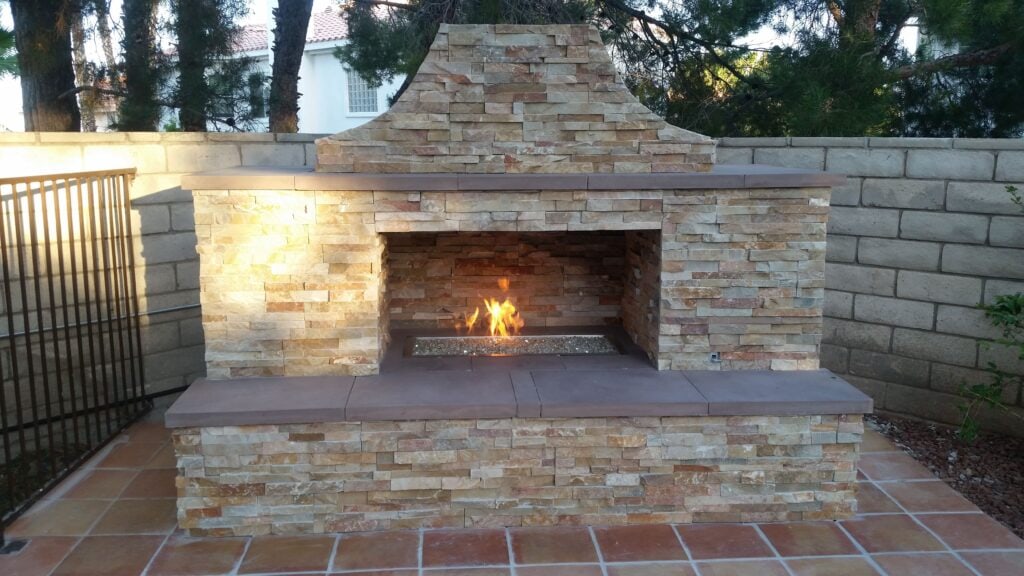
Determining the best location for your outdoor fireplace
Analyzing wind patterns and airflow
Before breaking ground, observe how air moves across your property during different seasons. Positioning your fireplace to intercept prevailing winds can actually work in your favor, provided you have a secondary barrier to prevent smoke from blowing directly onto your guests. Proper airflow adjustments allow you to enjoy your fireplace in comfort.
Considering proximity to the home
Placing the hearth near your main living space encourages frequent usage throughout the year. When you minimize the distance between your indoor kitchen and the outdoor fire, the transition becomes seamless. It is often most effective to design the fireplace as an extension of your existing patio to ensure it serves both the indoor and outdoor flow.
Evaluating existing patio infrastructure
Existing foundations provide a solid base, but they often require modification to support the weight of a stone fireplace. A professional contractor can assess if your current pavers or slab can handle the load or if an additional footer is necessary. Our team at Sun West Outdoor Kitchens focuses on creating structural integrity that lasts through Nevada’s unique weather cycles.
HOA guidelines and community standards
In master-planned communities like Summerlin and Anthem, HOA review is part of the process. Guidelines for clearance distances from combustible surfaces or property lines vary by city, so verifying these specifics early prevents delays. Consulting the Portfolio of a local builder can provide insight into successful installations in similar neighborhoods.
Selecting the right fuel type for year-round performance
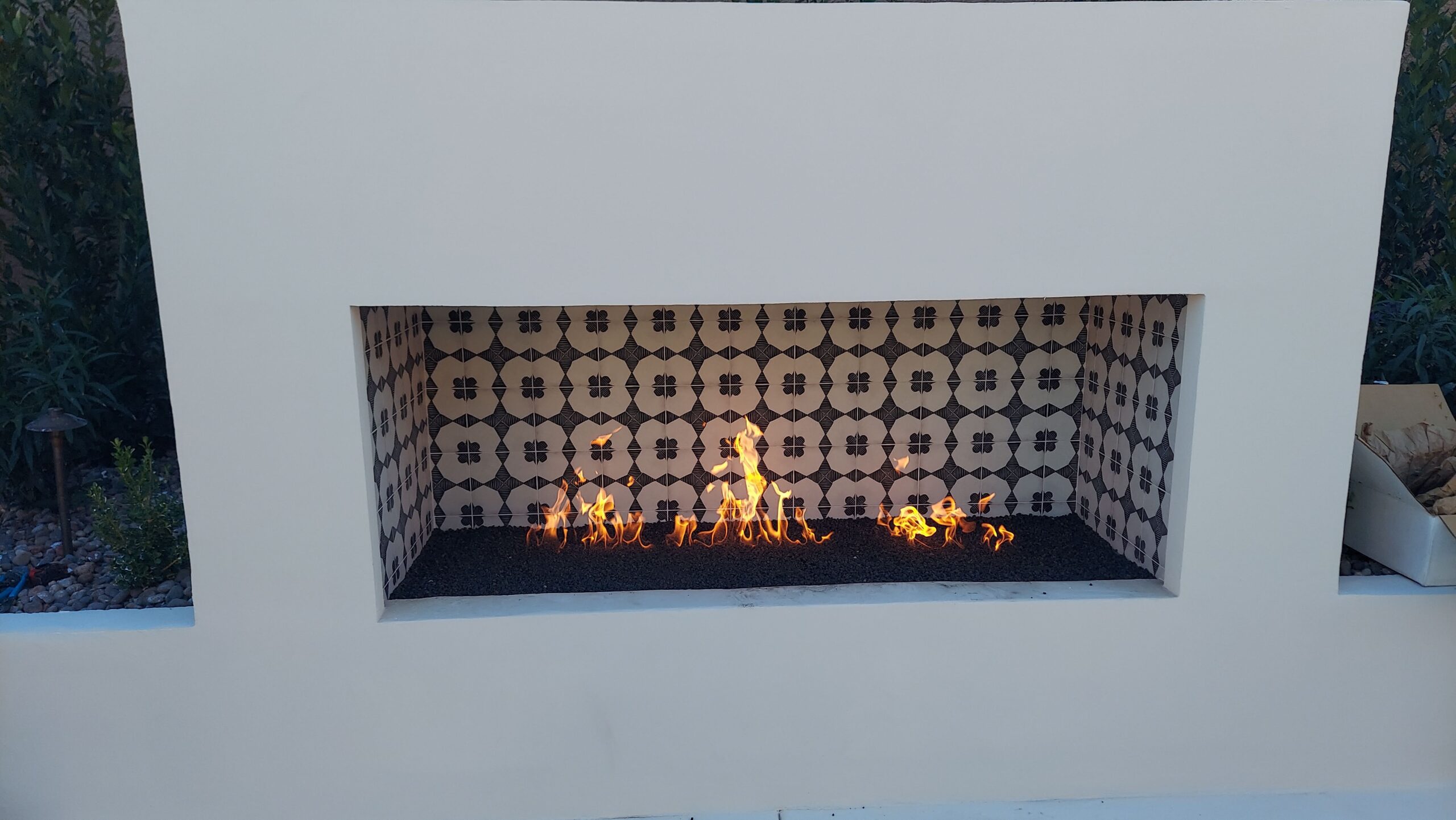
Comparing wood-burning for traditional ambiance
Nothing replaces the sensory experience of a crackling fire during a cool evening, making wood-burning units a favorite for those who value tradition. These fireplaces offer an authentic glow and a warmth that heaters simply cannot mimic. While they require effort to clean, they remain the centerpiece of any Outdoor Fireplaces project for those who enjoy the ritual of fire.
Assessing natural gas benefits for ease of use
For homeowners who want instant warmth without the cleanup of ash, gas is the superior choice. Gas fireplaces allow you to start a blaze with a simple switch, maintaining the luxury feel that Sun West Outdoor Kitchens often incorporates into high-end builds. It is a clean-burning, reliable option for consistent output.
Exploring propane for flexible placement
Propane units offer the flexibility for those who do not have natural gas available at their ideal spot. This allows you to place a fireplace where it best suits the landscape design, rather than being locked to one spot. Many modern propane models offer remarkably realistic flame patterns that rival gas installations.
Testing heat output levels for different climates
When comparing different fuel sources, consider the BTU (British Thermal Unit) output of each model. A fireplace intended for high-altitude or colder regional climates needs higher heat output compared to a mild-weather area. Assessing the intended use temperature ensures your gathering remains pleasant even when the desert night turns cold.
Integrating heating efficiency for colder months
Utilizing fire pit accessories for heat redistribution
Adding heat deflectors or glass wind guards helps direct ambient warmth inward toward your seating area rather than letting it escape into the night sky. These small adjustments can raise the perceived temperature of your patio significantly during the winter months. Integrating these Shop products enables greater usability of your space.
Structuring masonry to retain and reflect warmth
Massive stone or brick structures act as thermal batteries, absorbing heat throughout the evening and radiating it back once the fire begins to dim. We recommend utilizing high-density stone materials for this purpose to enhance long-term heat retention. The following table highlights common materials suited for this construction.
| Material Type | Heat Retention | Durability | Aesthetic Versatility |
|---|---|---|---|
| Natural Stone | Excellent | High | High |
| Fire Brick | High | Extremely High | Moderate |
| Concrete Pavers | Moderate | Moderate | Moderate |
Combining fireplaces with overhead heating solutions
Sometimes a fireplace needs extra help during particularly chilly nights, which is why pairing it with infrared heaters is a game-changer. By layering heat sources, you ensure that the entire seating perimeter remains comfortable. This approach is standard for those looking to expand the FAQ regarding their outdoor usability.
Creating windbreaks with strategic plantings
Dense landscaping serves as a natural barrier against cooling winds that often strip warmth away from an outdoor hearth. By pairing hardy, local shrubbery with your fireplace, you create a protected micro-climate that makes the space feel shielded. This approach creates a natural outdoor room.
Designing a functional seating layout
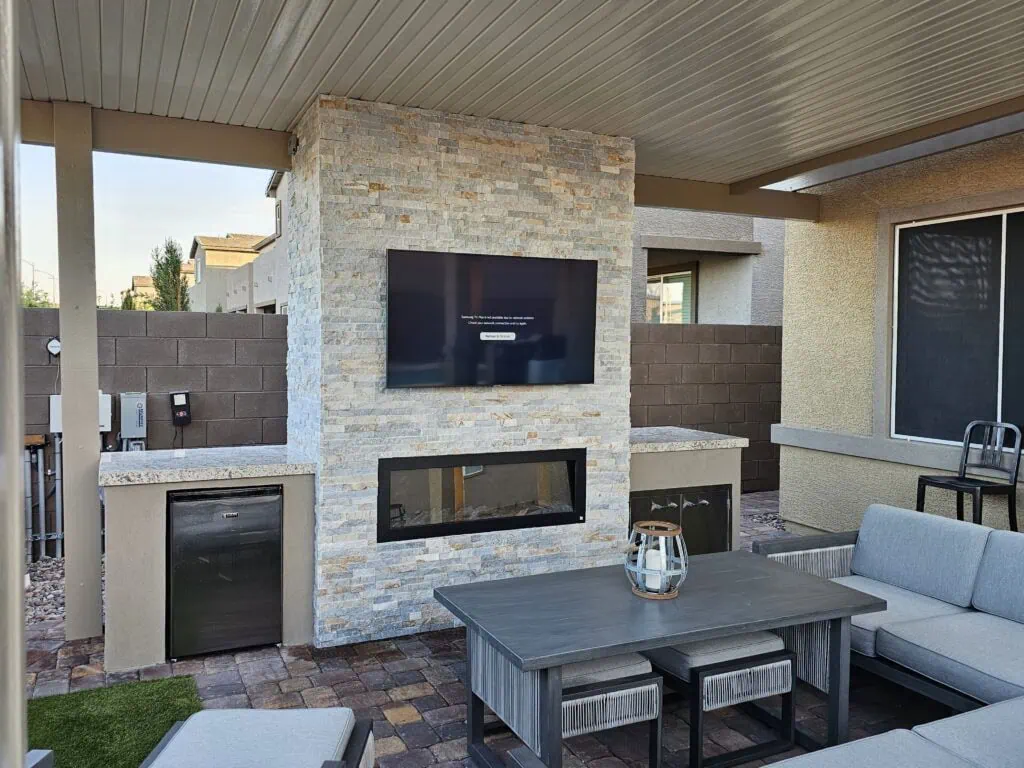
Choosing durable, weather-resistant furniture
Outdoor furniture must withstand intense sun and occasional moisture, making high-quality synthetic fibers or metal frames a necessity. Fabrics treated with UV-resistant coatings ensure your seating remains vibrant and comfortable year after year. Always select materials that breathe well to minimize heat buildup during summer days.
Creating intimate conversational circles
Arranging chairs in a soft curve around the hearth facilitates better conversation than rigid, linear rows. This simple design trick builds a focal point that draws guests inward, enhancing the social atmosphere of your outdoor room.
Incorporating built-in stone benches
Built-in seating eliminates the clutter of too many chairs, creating a clean, architectural look that feels intentional and luxury-focused. By adding plush cushions, you achieve a balance between the permanence of stone and the comfort of soft seating. At Sun West Outdoor Kitchens, we often design these into our custom masonry layouts.
Optimizing distance for comfortable heat exposure
Maintaining an ideal distance — generally 3 to 5 feet — from the fire allows guests to benefit from the heat without feeling overwhelmed. If the seating is too far, the warmth dissipates; too close, and the intense heat makes for an uncomfortable environment. Proper spacing keeps the seating area comfortable.
Incorporating weatherproofing and landscape design
Selecting materials that handle desert temperature swings
Las Vegas swings from triple-digit afternoons to cold desert nights, and porous stone struggles with that cycle. Selecting denser, non-porous materials ensures your structure remains intact throughout the winter. Proper sealing is necessary to keep moisture from seeping into the structure’s mortar.
Adding overhead cover for sun and wind protection
An overhead louvered roof or a pergola provides necessary shelter that keeps your seating and firebox dry during precipitation. This layer of protection is essential for ensuring your expensive appliances and furniture pieces maintain their condition for years.
Lighting designs to extend usage into the evening
Subtle downlighting or pathway lighting ensures the safety of your guests as they move in and out of the fireplace circle at night. Integrated LED lighting can adjust warmth and brightness, matching the tone set by the fire itself.
Choosing flooring that prevents slipping in wet weather
Texture is as important as aesthetics when choosing patio flooring material. Selecting tumbled stone or brushed concrete provides necessary traction, preventing slips when dew or rain hits the surface. A thoughtful layout considers drainage slopes to ensure water is directed away from your fireplace insert.
Essential safety and maintenance protocols
Establishing a regular cleaning schedule for fireboxes
Ash buildup can impede airflow and reduce the lifespan of your burner components, so periodic cleaning is mandatory. For wood-burning setups, removing cooled ash every few uses prevents the firebox from becoming choked. Always ensure that the fire is completely extinguished before beginning any maintenance task or cleaning cycle.
Safe ventilation practices for covered installations
If you have opted for a roof over your fireplace, proper vent sizing is crucial to prevent soot accumulation on your ceiling and to protect guest health. Consulting the manual provided by the installer ensures you meet all venting requirements. Never modify original vent setups without expert guidance.
off-season care for gas fireplace systems
For gas fireplaces, shutting off the gas supply and covering the unit during the off-season helps prevent water from entering the mechanical components. This minor effort prevents damage to the igniter and piping, ensuring your system performs well when you are ready to fire it up again. Following proper storage practices extends the life of your investment.
Implementing fire suppression measures nearby
Every fire feature should be accompanied by a readily accessible fire extinguisher kept in a nearby storage cabinet or discreetly mounted area. Educating family members on how to operate it ensures your peace of mind while enjoying the ambiance. Constant vigilance is the best approach to maintaining a safe outdoor fire environment.
Conclusion
Building a beautiful, functional outdoor hearth is an investment that allows you to enjoy your backyard through every season of the year. By focusing on site location, fuel choice, and intentional seating, you turn a simple fire feature into a permanent gathering place for family and friends. With the right craftsmanship and care, your space will offer lasting comfort that truly defines the outdoor living experience.
Frequently Asked Questions
How often should I perform maintenance on my outdoor fireplace?
Regular maintenance is best done before the peak usage season, typically mid-autumn, and again after winter concludes. Cleaning the firebox and an annual professional check-up ensures that your system remains reliable year-round.
Can I install an outdoor fireplace on a wooden deck?
You can install a fireplace on a deck, but you must use a unit specifically designed for combustible surfaces that includes heat-shielding insulation. Ensure the surrounding floor area is protected with a non-combustible material like stone or tile to avoid sparks.
What is the advantage of a see-through fireplace?
A see-through fireplace serves as a double-sided focal point, allowing you to enjoy the fire from two adjacent outdoor or indoor areas simultaneously. It maximizes the value of the hearth, effectively serving two distinct living spaces and creating a cohesive, open-feeling floor plan.
Can I leave my furniture near the fireplace all year?
Most outdoor furniture can remain outside, but you should move cushions to storage during wet weather or cover them with water-resistant fabric to prevent mold growth. Storing chairs inside or in a sheds during the depth of winter further extends the longevity of your high-quality pieces.
How much clearance does an outdoor fireplace really need?
Safety standards dictate that clearance requirements depend on whether the unit is gas or wood, and the materials used for the construction. Typical safety guidelines usually request a distance of at least 3 to 10 feet from any overhead projections or combustible walls depending on the specific model’s heat output.
Does ash need to be treated as hazardous waste?
Ash from wood-burning fireplaces is generally organic, but you should always verify local residential disposal guidelines first. In many cases, it can be added to compost bins or diluted in garden soil, provided it is completely cooled, but never add ash that contains treated lumber, plastic, or painted wood debris.
Build Your Outdoor Fireplace With Sun West
We build custom outdoor fireplaces and fireplace walls in stone, stucco, and porcelain — including fireplace-and-TV media walls, our most-requested design. Explore custom outdoor fireplaces, pair one with a fire pit or full outdoor kitchen, and contact us for a free design consultation — serving Las Vegas, Henderson, Summerlin, and surrounding areas since 1998.
Leave a Reply