
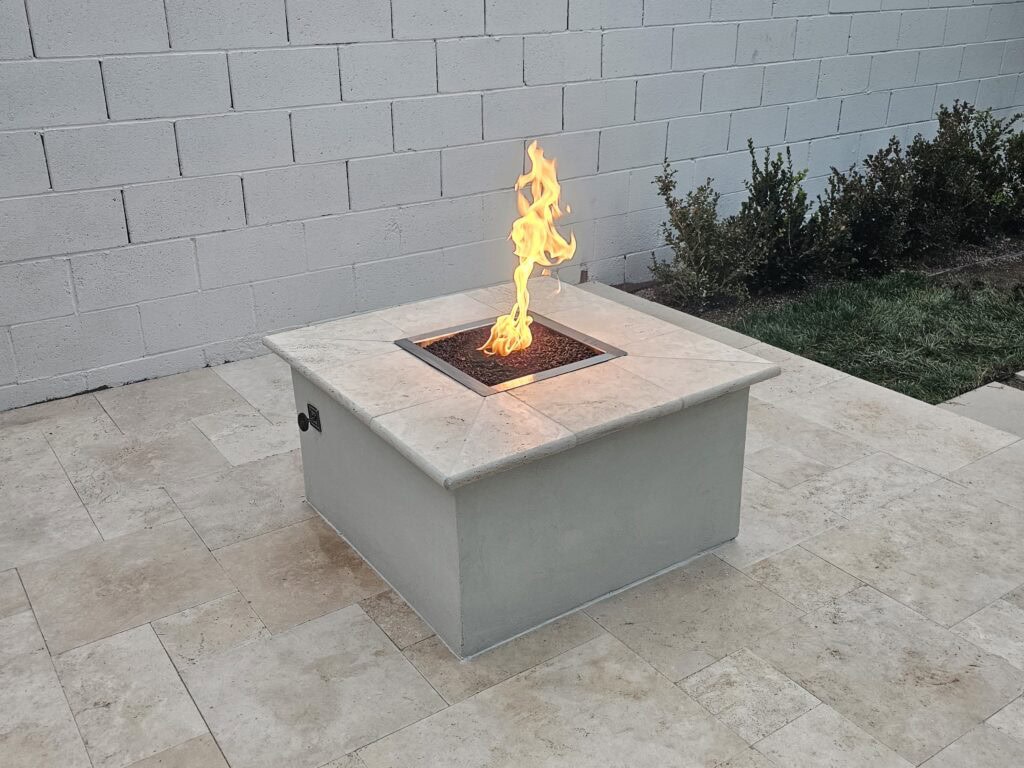
Selecting the perfect location for your fire feature
Finding the right spot requires looking at how your backyard physically behaves throughout the season. You want to place your feature where it brings people together without conflicting with the natural flow of your existing landscape. Our team at Sun West Outdoor Kitchens often advises clients to observe how the air moves across an open patio before finalizing any blueprints.
Assessing wind patterns and smoke ventilation
Smoke can quickly overpower a cozy evening if your site selection ignores local wind currents. Positioning a fire feature in a cross-breeze often results in smoke blowing directly toward your seating, detracting from the comfort of the space. You should position your fire feature to allow consistent smoke dispersion away from yourprimary lounge area.
Maintaining safe clearance from home structures and overhanging trees
Safety remains the baseline for every project we undertake at Sun West Outdoor Kitchens. Keeping the flames well away from siding, fences, and low-hanging branches is non-negotiable for preventing fire hazards. We recommend a wide, unobstructed perimeter around the fire source to protect your property and ensure that guests feel comfortable and relaxed without worrying about errant heat or floating embers.
Evaluating the stability and levelness of the terrain
Level ground is the foundation of a long-lasting fire feature. If the terrain is uneven, your fire table or masonry pit might experience shifting over time, leading to structural cracks. We check the grade of every outdoor space, ensuring that the base is perfectly stable, which lets us build with the precision your property deserves.
Planning fuel supply for gas-powered units
Your fuel choice — natural gas or propane — shapes the layout planning. Placing your fire units within a reasonable distance of these existing underground lines minimizes disruption to your established yard. When planning these logistics, you can rely on our team to plan the layout around your existing landscaping.
Choosing between fire pits and fire tables
Deciding between a central fire element or a functional table surface depends largely on how you intend to spend your evenings outside. Some homeowners prefer the raw look of a stone bowl, while others seek the practicality of a surface for dining and drinks. Sun West Outdoor Kitchens guides clients through these decisions by assessing their specific entertainment needs and material preferences.
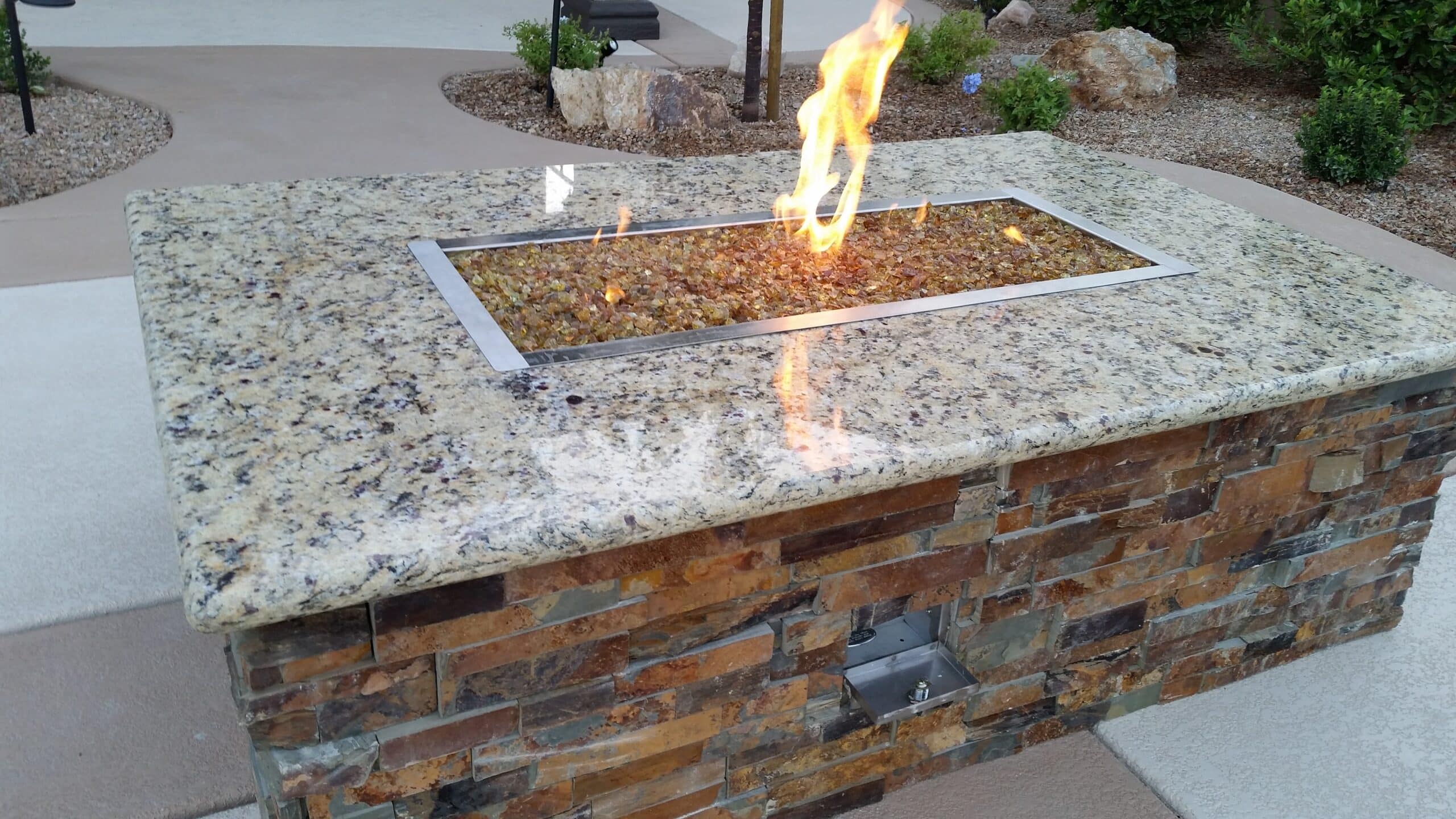
Maximizing versatility with multi-functional fire tables
Fire tables provide a dual-purpose solution that works exceptionally well for smaller patios or outdoor dining spaces. These features include a cover for the burner, allowing you to use the center as a standard table during the day. This utility makes them a hit for homeowners who want to maximize every square foot without overcrowding their deck.
Creating a traditional campfire atmosphere with open fire pits
Open fire pits offer a more classic experience that leans into the feeling of gathered warmth and nostalgia. Whether built from rustic stone or modern concrete, these designs encourage people to pull up a seat and face the center of the flames. It creates a conversational dynamic that bridges the gap between structured furniture and a casual, welcoming outdoor environment.
Matching the fuel source to your specific installation requirements
Selecting the right fuel is critical to how you operate your new feature daily. Gas-powered units are generally cleaner and easier to start, while wood-burning options provide the sensory experience of crackling logs and wood smoke. Integrating the correct setup is part of our standard practice on builds throughout Southern Nevada.
Comparing material durability for permanent outdoor setups
Choosing materials that withstand the local desert climate will define the longevity of your investment. You should prioritize surfaces that handle intense sun exposure and temperature swings without compromising their structural integrity over the years.
Designing a functional and safe floor plan
A well-designed plan acknowledges that people need room to circulate around the fire without bumping into furniture. Our project photos show how distinct zones created through furniture placement can define a space, and the same principle applies to your fire feature. You don’t want the warmth to be so intense that it forces guests to sit too far away; you need a layout that maintains accessibility while drawing people to the center.
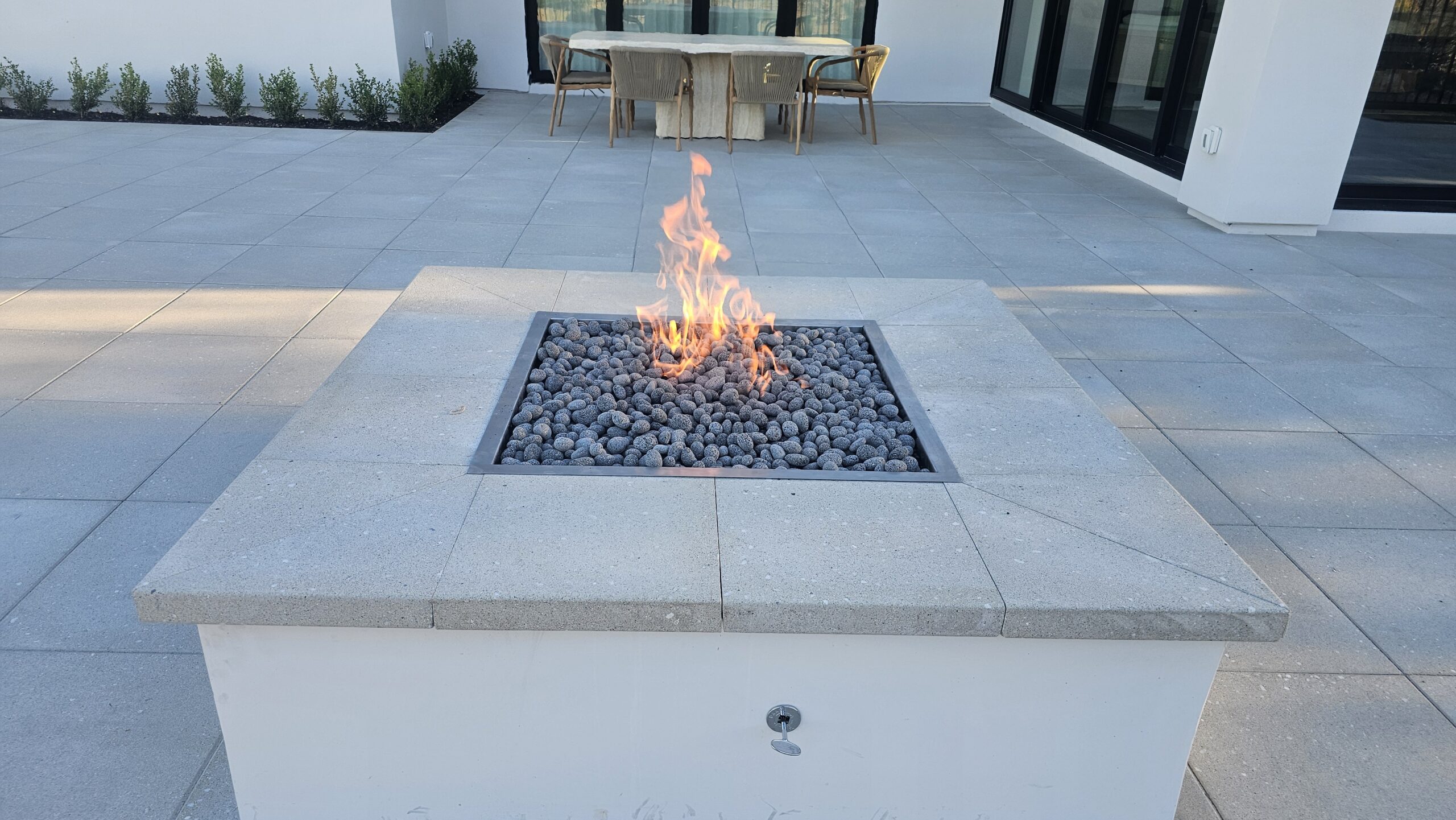
Calculating necessary clearance zones for foot traffic
Allowing roughly three to four feet of clear space around your furniture ensures that guests can enter and leave the lounge zone easily. This traffic management prevents tripping and ensures that the space inside feels open rather than cluttered, contributing to a more seamless transition between your indoor and outdoor areas.
Establishing non-combustible buffers around the feature
Safety is paramount when layering your floor plan with various materials. You should designate a buffer zone of at least a few feet composed solely of stone, pavers, or metal to act as a heat shield for your surrounding decking or landscaping fabric.
Creating intimate seating clusters to encourage conversation
Grouping chairs or adding modular sofa pieces in a curved formation focuses the attention toward the flames. This setup naturally keeps the conversation flowing and ensures that the fire feature remains the heart of the home, just as you might see when visiting a Portfolio for inspiration.
Implementing effective zoning for separate dining and lounge areas
- Define dining spaces with elevated surfaces located further from the heat source.
- Use area rugs or distinct paver designs to visually separate the lounging fire zone from the eating zone.
- Position your lounge chairs inward toward the feature to ground the seating area.
This approach helps you get the most out of your patio, keeping decorative accessories for the eating section separate from the heat-sensitive items stored near the fire.
Integrating hardscaping and landscape elements
Integration involves balancing the raw beauty of stone with the natural appeal of surrounding plants. Quality masonry can define a room’s boundaries while plants help to ground it into your existing garden. You can browse our project gallery to see how we blend custom stonework with desert-hardy vegetation to create cohesive designs.
Selecting durable materials like natural stone or paver blocks
Standard masonry materials vary significantly in their heat resistance and general longevity. Choosing the right material ensures your feature remains a staple of your landscape for years to come.
| Material Type | Heat Resistance | Maintenance | Aesthetic Appeal |
|---|---|---|---|
| Natural Stone | High | Low | Organic |
| Concrete Pavers | Medium | Moderate | Versatile |
| Fire Brick | Very High | Low | Traditional |
Incorporating built-in benches to maximize space efficiency
Built-in seating eliminates the need for bulky loose furniture and can be designed at the same time as your fire pit. These custom features blend seamlessly with your hardscaping and can even include storage underneath the seat for wood or gas starters.
Designing decorative retaining walls for added privacy
Retaining walls do more than just manage a slope; they serve as a perfect backdrop for your fire feature. By building them at a comfortable sitting height, they double as overflow seating during large gatherings, effectively making your space more communal without sacrificing your privacy.
Softening hard edges with strategic border plantings
Adding drought-tolerant plants as a border helps unify your hardscaping with the rest of your yard. Use taller grasses to create a soft perimeter that sways in the breeze, which contrasts beautifully with the sharp, clean lines of your stone work.
Enhancing the atmosphere with lighting and decor
Lighting should be subtle enough to allow the fire to shine but bright enough to make the area usable after dark. Your approach to lighting can make the entire Portfolio appear more elegant and welcoming. Consider adding Shop lanterns or decorative pieces that reflect the warm glow of the flames.
Layering low-voltage landscape lighting for depth
Low-voltage path lights along the surrounding garden beds help mark the entrance to your fire zone. This layer of light creates depth, drawing the eye across the patio and making your entire outdoor oasis feel bigger when the sun goes down.
Installing overhead string lights to define the open-air ceiling
String lights act as a virtual ceiling, creating a contained and cozy visual effect over your lounge space. They help to frame your sitting area, distinguishing it from the rest of the dark backyard, yet they remain soft enough not to bleach out the subtle, flickering light coming from the fire.
Styling the surrounding area with weather-resistant textiles
Using outdoor-friendly fabrics in warm, earthy tones brings comfort to your stone-heavy lounge area. Cushions and pillows contribute texture and color, which adds to the comfort level of the space. It is worth browsing our Shop catalog for materials that hold up against the Nevada elements.
Placing lanterns and accent pieces to complement the fire glow
Small lanterns positioned near the edge of your fire table base repeat the flickering element in a safe, static way. These small décor additions help distribute the glow throughout the space, creating a balanced and high-end aesthetic that feels intentional.
Conclusion
Creating a sanctuary around a fire feature requires a thoughtful balance between safety, functionality, and personal taste. By carefully choosing your location, selecting the right type of installation, and tying it all together with purposeful landscaping and lighting, you can craft a space that invites warmth and connection for years to come. If you are ready to start planning your outdoor transformation, please Contact Us to explore how we can bring your vision to life.
Frequently Asked Questions
Can I install a fire pit directly on my wooden deck?
Most traditional fire pits should not be placed directly on a wood deck because the heat can damage the planks and ignite the wood. You must use a heat-resistant pad, a metal barrier, or a specially designed fire table that features insulation to protect the substrate underneath.
How close to my home should I place a fire feature?
It is recommended to maintain at least 10 to 15 feet of distance between an open-flame fire feature and any structure, including your house walls, eaves, or fences. Always check with your local residential guidelines to ensure you follow standard safety practices for your specific area.
What fuel type is best for a low-maintenance fire feature?
Natural gas or propane fire units are generally considered the most low-maintenance options because they offer instant ignition and do not produce ash, soot, or sparks. These units are highly convenient for a quick evening fire with minimal cleanup required.
How do I keep the smoke from blowing into my seating area?
Correctly assessing the primary wind direction before installation is the most effective way to avoid smoke issues. If your site is already fixed, you might consider using glass wind guards or positioning your seating in a way that minimizes the impact of the prevailing breeze.
Do I need a professional to install a gas-powered fire feature?
Yes — fuel connections should always be handled by a licensed professional as part of the build. Working with a licensed professional ensures your installation meets safety standards and functions reliably, protecting your property value.
Are built-in stone features better than portable options?
Built-in stone features generally offer a higher level of durability and integration with your home’s aesthetic compared to portable pits. A permanent installation allows for premium material finishes and high-end design, making it a stronger long-term addition to your outdoor living space.
How often should I perform maintenance on my fire feature?
Gas fire tables should be checked seasonally to ensure all components are clean and debris-free. If you have a wood-burning pit, it is best to remove ash buildup after each use to prevent moisture-related rusting or corrosion in the masonry of your fire bowl.
Build Your Fire Feature With Sun West
Every fire pit and fire table we build is custom masonry, finished to match your patio and engineered for the desert. Explore our custom fire pits and fire tables, or fold one into a complete outdoor kitchen. Contact us for a free design consultation — serving Las Vegas, Henderson, Summerlin, and surrounding areas since 1998.
Leave a Reply